


🚗🧪 Combustion Leak Tester — Quickly Detect Exhaust Gas Leaks in Your Cooling System!
🚗🧪 Combustion Leak Tester — Quickly Detect Exhaust Gas Leaks in Your Cooling System!
BUNDLE & SAVE
Couldn't load pickup availability
-
Ordered
- - -
Order Ready
- - -
Delivered

🚗🧪 Combustion Leak Tester — Quickly Detect Exhaust Gas Leaks in Your Cooling System!


Watch The Vapor. Read The Color. Question The Guesswork.

Still Losing Coolant And Buying Parts?
Your coolant keeps disappearing. The driveway stays dry, and now you're pricing another water pump. Before you buy one more part on suspicion, draw cooling-system vapor through this tester and look for a visible combustion-gas color change.

A Clean Engine Bay Proves Nothing
You don't hand over your money because someone says the engine is fine. You're the person who asks the awkward questions and wants evidence before reaching for the wallet. In a seller's driveway or your own garage, a combustion-gas check adds something more useful than another confident opinion.

Keep Coolant Out Of The Evidence
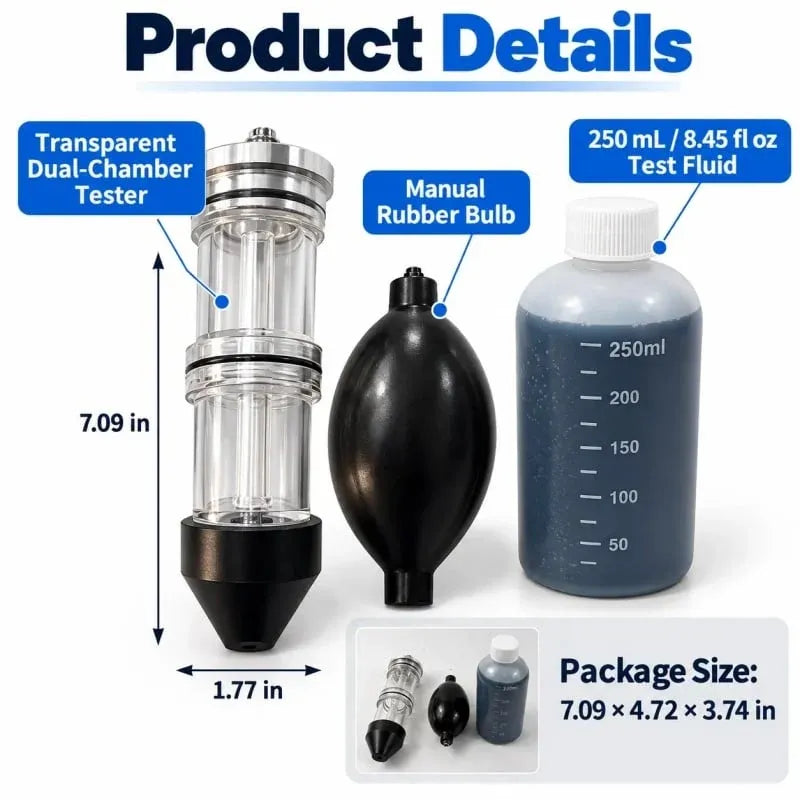
You want to sample vapor, not suck coolant into your test fluid. The stacked dual-chamber design provides a lower buffer to help intercept coolant splash before it reaches the upper testing chamber. Through the transparent body, you can watch the bubbling and monitor your sample instead of working blind.

Blue To Yellow Beats Another Guess
You squeeze the bulb and watch vapor bubble through the indicator fluid. Blue is the reference color; a shift toward yellow indicates possible combustion gas in the sample. That gives you a reason to investigate engine sealing—not proof of which component failed, and not a blanket engine-health guarantee if it stays blue.

Your Thumb Is The Power Supply
You control vapor sampling with the black rubber squeeze bulb—no batteries, cords, or compressor. The tapered rubber cone seats in compatible cooling-system openings, while built-in LEVEL marks give you a filling reference. Choose the tester alone if you have compatible fluid, or the option with a 250 mL bottle.

Don't Carry The Guesswork Into Winter
Put off the check, and unexplained coolant loss stays unexplained as winter approaches. With a listed price of $29.99, this tester puts a diagnostic step ahead of your next speculative parts purchase. Choose your kit, make it part of your pre-winter inspection, and base your next move on evidence—not hope.
Test First. Buy Parts Second.
Replacing parts on suspicion gives you a bill. Sampling cooling-system vapor gives you a visible combustion-gas clue to guide your next diagnostic step.
| thegiftnorth.com | Parts Guesswork | |
|---|---|---|
| A gas check before expensive teardown | ||
| Visible evidence before choosing repairs | ||
| Blue-to-yellow combustion-gas indication | ||
| Dual-chamber coolant-splash buffer | ||
| Hand-controlled sampling without electrical power | ||
| Clear chambers with LEVEL references |
Buyer Perspectives — Not Verified Customer Testimonials
Before You Pop The Hood
Will it fit my radiator or expansion tank?
Will it fit my radiator or expansion tank?
The tapered rubber cone seats in compatible radiator or expansion-tank openings. Fit is not guaranteed for every vehicle; check your opening and available access before ordering.
Does my order include test fluid?
Does my order include test fluid?
There are two options: the tester assembly alone, or the tester with a 250 mL test-fluid bottle. Choose the fluid-inclusive option unless you already have compatible combustion-leak test fluid.
Does yellow prove the head gasket has failed?
Does yellow prove the head gasket has failed?
A yellow shift indicates possible combustion gas in the sample, not which component failed. Head-gasket, cylinder-head, or engine-block problems need further diagnosis; unchanged blue does not rule out every fault.
How do I use it safely?
How do I use it safely?
Never remove a hot or pressurized cooling-system cap. Let the system cool before opening, then follow your vehicle and tester instructions. Draw vapor through the tester, not liquid coolant.